
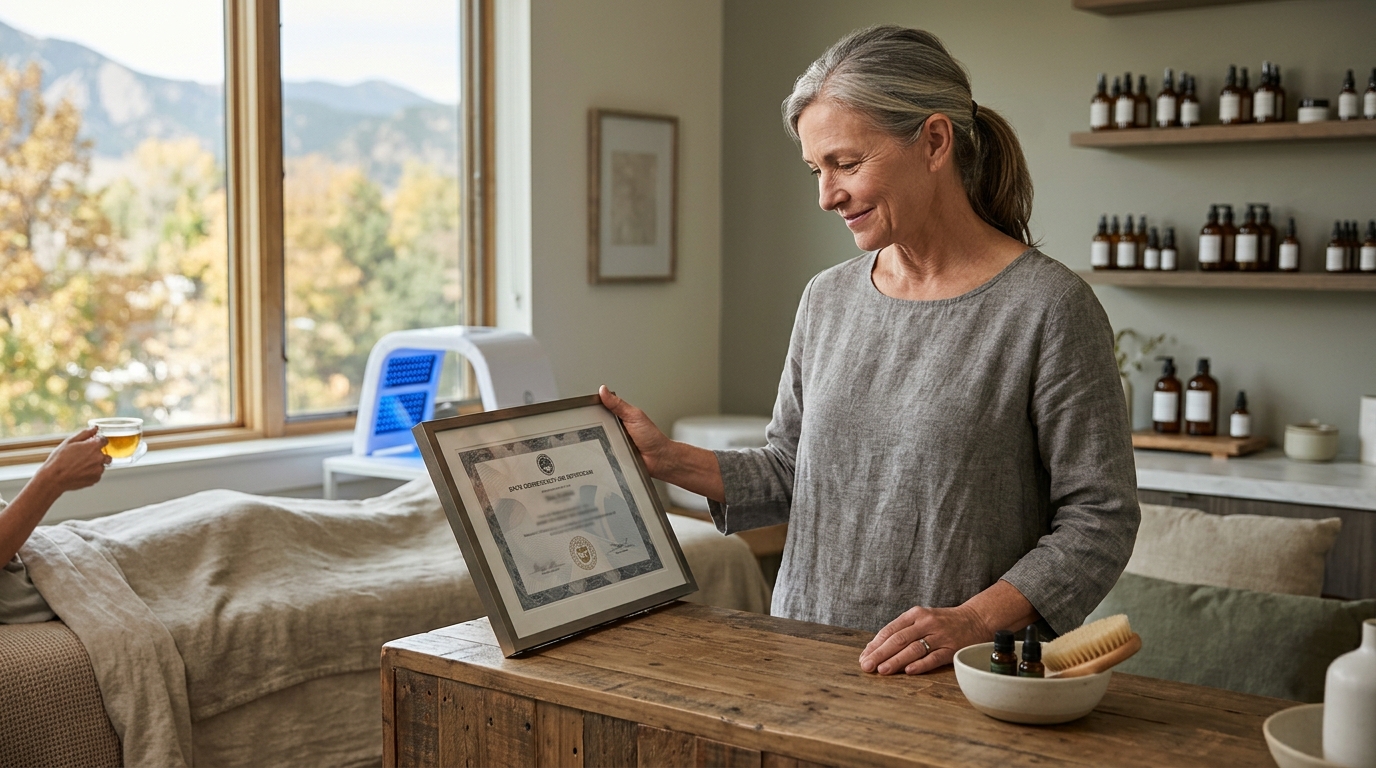
Verifying an esthetician's license is a critical safety step before booking any facial or advanced skin treatment. You can confirm credentials by checking your state's specific licensing board database or requesting a physical license display in the treatment room. In the United States, approximately 183,000 estheticians are currently licensed, a number that the Bureau of Labor Statistics projects will grow by 11 percent over the next decade. Ensuring your provider is properly credentialed protects your skin health and guarantees that the professional adheres to strict hygiene and safety standards.
Understanding Esthetician Licensure
Esthetician licensure is a state-regulated credential that authorizes a professional to perform specific skin care services. Unlike general cosmetology licenses, esthetician licenses focus exclusively on the face, neck, and upper body. The scope of practice varies significantly by state, meaning a license in one region may not cover the same procedures in another. For example, some states allow licensed estheticians to perform microdermabrasion, while others restrict this to medical spas or require additional certification. Understanding these boundaries is the first step in verifying that a provider is qualified for the specific treatment you desire.
In Colorado, where Skin Care With Dory is located, the regulatory framework ensures that practitioners undergo rigorous training and examination. Dory Johnson, the lead esthetician at our Boulder practice, holds professional degrees from both Colorado and California. This dual-state credentialing demonstrates a high level of commitment to professional standards. When you see a provider with multi-state licensure, it often indicates a deeper understanding of diverse skin types and regulatory environments. This background is particularly valuable for clients seeking advanced treatments that require precise technique and safety awareness.
Using State Licensing Databases
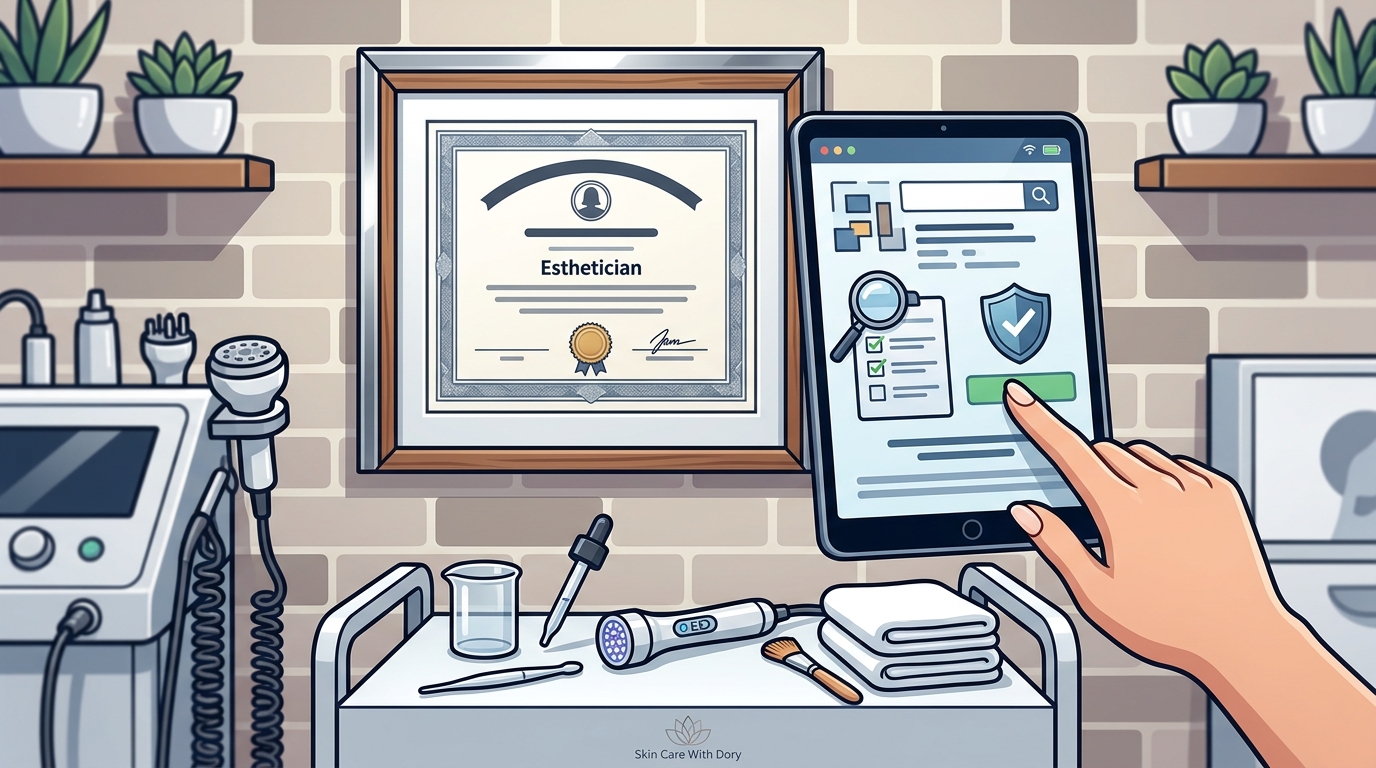
The most reliable method to verify a license is through your state's official licensing board website. Most states, including Colorado and California, maintain public online databases where you can search for active licenses by name or license number. These databases provide real-time information on a professional's status, expiration date, and any disciplinary actions. You should rarely rely solely on a business website or social media profile for verification. A provider may list their credentials on their site, but only the state board can confirm if the license is currently active and in good standing.
When searching these databases, look for the specific license type. For instance, the California Board of Barbering and Cosmetology defines esthetics as the practice of giving facials, applying makeup, and providing skin care. Their public licensee search tool allows you to verify that a professional is authorized to perform these services. If you are booking an appointment in Boulder, you can verify credentials through the Colorado Department of Regulatory Agencies. This direct verification ensures that the person performing your facial is legally authorized to do so. It is a simple step that provides peace of mind and protects your investment in skin health.
In-Person Verification and Office Standards
Regulations in most states require licensed professionals to display their license in a visible location within the business premises. When you arrive for your appointment, take a moment to look for this display. It is typically a framed document or a digital screen showing the license number and expiration date. If the license is not visible, you have the right to ask for it. A reputable provider will be transparent about their credentials and will not hesitate to show you their license. This physical verification complements the online database check and confirms that the person you are seeing is the one listed on the license.
At Skin Care With Dory, we prioritize transparency and client safety. Our practice is designed to meet all state regulatory requirements for hygiene and credentialing. We believe that clients should feel confident in the expertise of their provider. If you are new to professional skin care, asking about licensing is a sign of a well-informed client. It shows that you value safety and quality. Our team is happy to answer any questions you may have about our credentials and the specific treatments we offer. This open communication helps build trust and ensures that you are in the right hands for your skin care journey.
Identifying Red Flags in Unlicensed Practices
Unlicensed practices often exhibit specific red flags that should prompt you to reconsider booking an appointment. One common sign is a lack of clear pricing or a refusal to provide a written treatment plan. Licensed professionals are trained to assess your skin and recommend appropriate treatments based on your specific needs. If a provider pushes aggressive sales tactics or refuses to answer questions about their training, it is a warning sign. Another red flag is the use of unverified products or equipment. Licensed estheticians use professional-grade products that are safe for skin application. They also follow strict sanitation protocols to prevent cross-contamination.
Be cautious of providers who claim to offer medical-grade treatments without proper medical supervision. While some estheticians work in medical spas, they must still hold a valid esthetician license. Medical procedures such as laser treatments or chemical peels that penetrate the dermis often require a medical director or a different type of license. If a provider is offering services that seem to exceed the scope of a standard esthetician license, verify their specific credentials. This is especially important for advanced treatments like Jet Plasma or microneedling, which require specialized training. At Skin Care With Dory, we clearly define the scope of our services and ensure that all treatments are performed within the bounds of our professional licenses.
Why Verification Matters for Skin Health
Proper licensing ensures that an esthetician has completed the required hours of training and passed a state examination. This training covers anatomy, physiology, sanitation, and the safe application of skin care products. Without this foundation, a provider may not recognize signs of skin conditions that require medical attention. For example, a licensed esthetician is trained to identify potential skin cancers or infections and will refer you to a dermatologist if necessary. An unlicensed provider may miss these critical signs, putting your health at risk. Verification is not just about legality; it is about ensuring that your skin is in the hands of a trained professional.
Additionally, licensed professionals are bound by a code of ethics that prioritizes client safety and confidentiality. They are also required to maintain continuing education credits to stay current with new techniques and products. This ongoing education ensures that you receive the most up-to-date and effective treatments. When you choose a licensed esthetician, you are choosing a partner in your skin health journey. At Skin Care With Dory, we are committed to providing personalized, science-based care that respects your skin's unique needs. By verifying our credentials, you can rest assured that you are receiving the highest standard of professional care.
Key Takeaways
- Always verify an esthetician's license through your state's official licensing board database.
- Check for a visible license display in the treatment room or ask to see it directly.
- Understand the scope of practice for estheticians in your specific state.
- Be wary of providers who refuse to answer questions about their training or credentials.
- Licensed professionals are trained to identify skin conditions that require medical referral.
- Multi-state licensure, like that of Dory Johnson, indicates a high level of professional commitment.
- Verification protects your skin health and ensures you receive safe, effective treatments.
Frequently Asked Questions
How do I check if an esthetician is licensed in Colorado?
You can verify a license through the Colorado Department of Regulatory Agencies website. Search for the professional's name or license number in their public database to confirm their status and expiration date.
Is a certificate the same as a license?
No, a certificate is not the same as a license. A license is issued by a state regulatory body and is legally required to practice. A certificate may indicate completion of a specific training program but does not authorize independent practice.
Can I ask to see an esthetician's license?
Yes, you have the right to ask to see a provider's license. Reputable professionals will be transparent about their credentials and will display their license in a visible location.
What is the difference between a cosmetologist and an esthetician?
A cosmetologist is licensed to perform hair, skin, and nail services, while an esthetician is licensed specifically for skin care services on the face, neck, and upper body.
Do I need to verify the license if I am booking a facial?
Yes, verifying the license is a simple and important step to ensure your safety. It confirms that the provider is legally authorized to perform the services you are booking.
Where can I find the license number of an esthetician?
The license number is typically displayed on the physical license in the office. You can also find it in the state licensing database when you search for the professional's name.
Conclusion
Verifying an esthetician's license is a straightforward process that significantly enhances your safety and confidence in your skin care provider. By using state licensing databases and checking for visible credentials, you can ensure that you are in the hands of a qualified professional. At Skin Care With Dory, we are committed to transparency and excellence in every treatment. We invite you to explore our services and verify our credentials as you plan your next appointment. Your skin deserves the highest standard of care, and we are here to provide it with personalized, science-based expertise.